denisavcarterssc@tiscali.co.uk

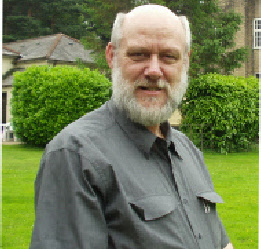
Fr. Denis A.V.Carter SSC’s Site

I am from the town of Rochdale in Lancashire UK, where I went to school and worked as auto-repairer and panel beater.
In 1974 I joined the Columban Fathers, a Catholic missionary society, and was ordained 1981. Since early 1982 I worked in Pakistan . Much of my work was in the southern province of Sindh, which is mostly desert, and worked among the tribal people there.

As parish priest, I was involved in many aspects of life, including Catechesis, interfaith dialogue, justice and peace issues, primary health care and child/adult education. I also have an M.A. in Spirituality and Spiritual Direction and some my of time is now spent giving retreats.

I am now The Director of the British region of the the Columbans.

The Society of Saint Columban

St. Columban’s
Widney Manor Rd, Knowle, Solihull.
West Midlands B93 9AB
Tel. 01564 772096

www.columbans.co.uk


Next Page

Top

The Parish House and Church of St. Joseph’s Matli, Sindh Province of Pakistan

Introduction

I grew up in the Lancashire town of Rochdale, which has a large population of Indian and Pakistani immigrants. I went to school with many of them and naturally had many friends from their community. It was in no small way that my life was changed and influenced by these people, to the extent that by trying to learn about their faith and religion, I found my own in the Catholic Church.
In my own searching and study of the scriptures I met Jesus, and wanted to learn more about him. I realised that in order to do that, I had first to become a disciple, then come to know and love God, to live in Him and to allow Him to live in me.
Becoming a disciple and devoting my life in service of the faith, I soon found that people kept suggesting that I should become a priest.
One day I came across the commandment of Jesus to Go and make disciples of all nations. This idea took hold of me. I did not know what to do or how to go about following this command. So one evening after spending some hours in prayer I set out on a tour of the local churches. In the porch of many, I found pamphlets and information about religious orders and missionary work. Back at home I spent the night searching through them for some clue as to what I should do. Finally, tired and totally confused, I sat back and felt like forgetting the whole thing. I did not really know if I wanted to be a religious brother or monk, or did I have the ability to be a priest?. Totally frustrated, I decided to cut the Bible, hoping for a suggestion. The pages opened at the Acts of the Apostles and the passage where the Apostles cast lots to elect a replacement for Judas, and the lot fell on Matthias.
That was a clue. I stacked all the magazines and pamphlets on the floor and prayed to the Lord. I said that the first thing I see that asks or suggests a vocation, I would send for more information. I kicked over the pile and saw a small coupon on the back of a magazine, the Columban Missionary Society's
Far East. It had the challenge, 'Could you be a Missionary Priest? in bold letters. I thought maybe I could. I cut it out, filled it in, and posted it off the next morning.
After what seemed a long time spent in preparation and more study, I became a Columban Father, the week before Christmas, 1981.
The Columban Fathers assumed that the ideal place for me to work on Mission would be Pakistan. As someone said, Coming from Rochdale, it would be like working home from home for you.
Well, after my ordination I was sent to work in Pakistan, where I spent 18 months studying the Urdu language. When the school judged that I was competent enough to be let loose on the people, the Columban community in their wisdom and

wonderful sense of humour appointed me to my mission. I was sent to the southern province of Sindh, where the national language is Sindhi. My work was to be in the tribal apostolate among the Parkri Koli People and the Punjabi migrants who spoke their respective, distinctive languages, not Urdu. It was a time of frustration, as you can imagine.

It was with some mixed feelings of joy and excitement that I discovered the Mohajir Muslim shopkeepers in the local bazaar, who spoke Urdu as their mother tongue. The Mohajir people are those who migrated from India to Sindh at the time of partition in 1947.


The stories that follow are some of my encounters with the wonderful people of that land.